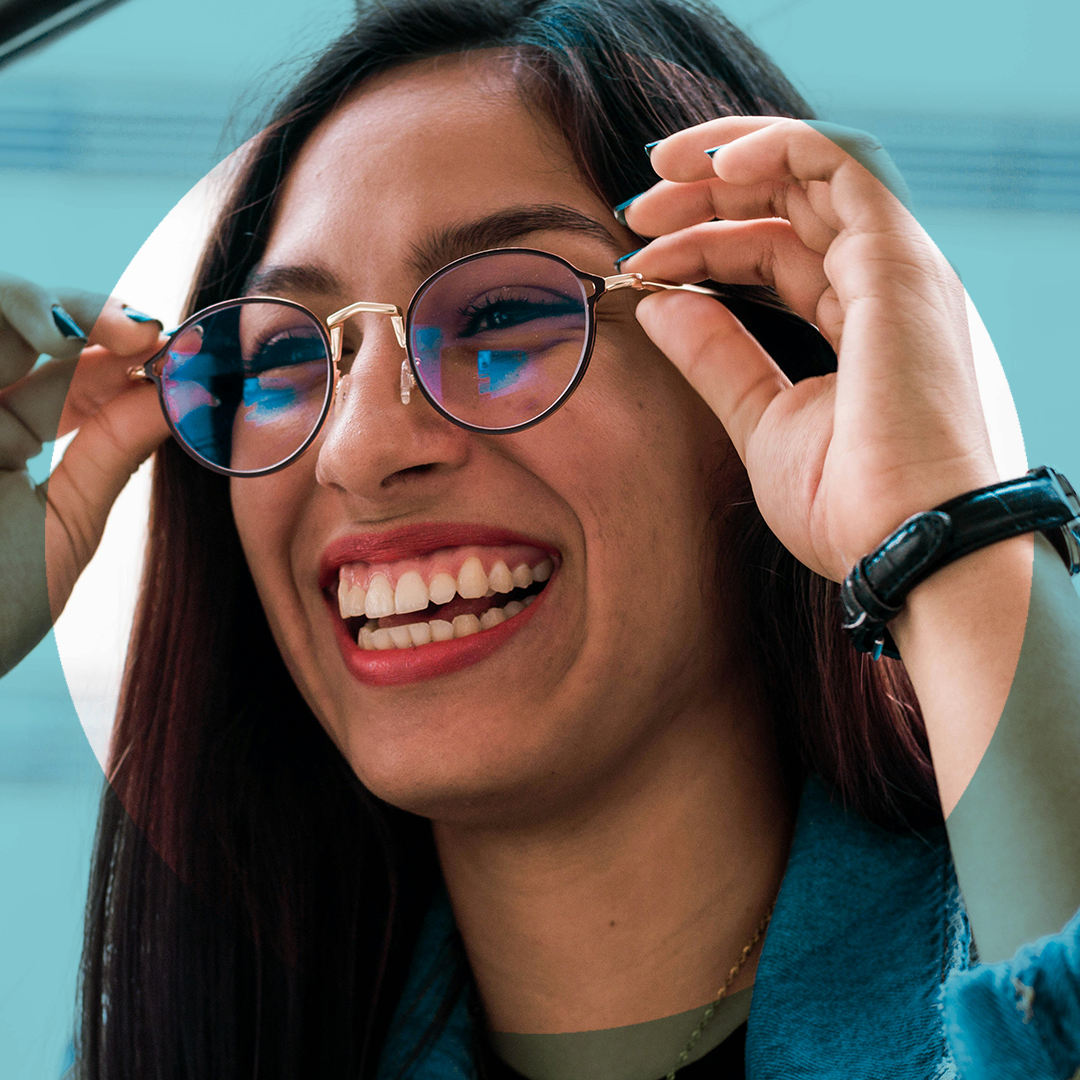
Australis AllDay is an exceptional performance progressive lens, representing the newest evolution in freeform design. It features patented technologies for enhanced cosmetics and reduced peripheral distortions, ensuring the widest and most comfortable viewing range at any distance.
OptiGaze
Optimised, natural vision for the point-of-wear measurement, fully adapted to the patient and their selected frame.
Digital Enhancement
Easy transition between near and far vision, comfortable and sharp visual experience.
EyeHarmony
Improved fusion of lateral images and provides sharper peripheral vision.
HyperThin
Lighter, thinner lens, both in the center and on the edges by pre-calibrating the crib for digital surfacing.
MightyView
Up to 20% aberration reduction, swim effect minimalisation, maximum visual performance.
AccuPath
Automatic corridor length and optimum inset calculation to provide easy adaptation to the lens.
Learn how it works
Bi-Focal lenses are lenses divided into two parts to correct any two prescriptions, most commonly close and long distance.
Speak with our Expert Australian team about your next lens.
CR Labs is Australia’s market leading independent optical lens manufacturer, located in Melbourne, Victoria.
Speak with our Expert Australian team about your next lens.


Yes—many professions with intensive digital, task-specific or ergonomically unique visual demands continue to rely on general-purpose lenses even when a vocational design would dramatically improve comfort and performance. This includes fields such as finance, design and architecture, engineering, coding, customer service roles, and administrative or clinical support roles.
The gap persists largely due to historical perception. Occupational lenses have long been marketed as a “second-pair” solution, which has shaped both dispenser habits and patient expectations. In reality, contemporary vocational designs—especially those enhanced through VR customisation—are sophisticated enough to serve as a primary-pair option for many users. As workplace demands evolve, the industry is gradually moving away from the idea that an occupational lens is supplementary; increasingly, it is becoming the most logical first choice for visually intensive professions.
The Australis VR Office environment includes six different workstation simulations that reflect common modern office setups. These allow the wearer to explore, assess, and select the scenario that best matches their daily tasks—whether large dual monitors, mixed laptop-and-screen use, document-heavy workflows, or highly mobile digital engagement.
By capturing how the wearer performs visually within these tailored simulations, we can fine-tune the design to optimise the specific distances, gaze paths, and zones they rely on most. This has resulted in noticeably improved comfort, faster adaptation, reduced head movement, and more stable intermediate and near-vision performance for patients working across variable or dynamic office settings.
The VR design environment provides a level of personalisation that traditional lens development cannot match. Because VR lens creation begins from a completely blank design—rather than modifying a predetermined template—it allows the system to build an optical solution around the wearer’s actual functional requirements.
For dispensers, this eliminates guesswork around occupational needs and enables a more accurate interpretation of visual behaviour. For patients, the experience is highly intuitive: they can “step into” their workplace tasks and allow the design engine to tailor the lens zones based on real-time behavioural inputs, ensuring the final product is genuinely unique to how they see and work.
CR Labs has significantly advanced the adaptability of the Australis VR Office design by integrating extensive post-order user data. We collect performance insights from wearer tests conducted globally and apply AI-driven analysis and algorithmic modelling to refine how the lens zones respond to real-world usage.
Gaze Dynamic applications—informed by this data—allow us to understand how wearers naturally look through their lenses during different tasks. This continuous feedback loop enables us to subtly reshape and optimise the corridor profiles, intermediate regions, and near-vision zones, resulting in a lens that better matches real working behaviour rather than relying solely on theoretical design assumptions.
Workers today face a far more visually complex environment than even a few years ago. The shift to hybrid work has introduced greater variation in physical and ergonomic setups—different desks, chairs, lighting conditions, screen heights, and viewing distances. At the same time, the number of digital tools and applications used simultaneously has increased, often requiring users to navigate multiple screens or windows for extended periods.
This combination of variable physical ergonomics and visually intensive digital multitasking typically leads to complaints such as eye strain, difficulty switching focus between distances, postural discomfort, reduced visual stamina throughout the day, and increased reliance on compensatory habits like leaning forward or lifting the chin to maintain clarity.
CR Labs is Australian owned and made, meaning all services and products are on Australian soil. We are faster than most competitors and have an exceptional in-house customer service team. We leverage advanced technology for superior quality, offer flexible customisation options, and ensure efficient production with most orders completed in approximately 5 days. Our commitment to innovation and rigorous quality control makes us a preferred choice for high-quality optical solutions.
We at CR Labs pride ourselves in delivering exceptional quality service. Typically it can take up to 5 days in house for your lenses to be developed.
Established in 1976 CR Labs has a long standing history in supporting Australia’s independent optometry market.
CR Labs proudly supports 50 Australian families, backed by our team with over 100 years of combined optical expertise.